A Spiritual Nomad

“How can we sing the songs of the LORD while in a foreign land?

Psalm 137:4


Elmer Picket was a creature of habit. He awakened every morning at 6, did his chores between his first cup of coffee and breakfast. He wore the same boots he’d worn for years and always hung his coat on hook to the right of the kitchen door. Routine gave him a sense of comfort, which is why he was so disturbed when he came in one morning and realized his coat hook was gone. 

“What am I supposed to do with my coat,” he asked his wife who explained she was redecorating the entrance way. 

“You’ll just have to hang your coat on another hook,” she replied.


What do you do when something you’ve relied on, been comforted by, and expected, is taken away? That’s the question so many of us have been asking as we’ve tried to adapt to life during the pandemic. Some of the changes have been small, others significant, but all of them have left us off-center and out of sorts. The hook has been moved and we don’t know what to do with our coat.

For me, the biggest adjustment has been finding a spiritual home. I love and rely on church to ground me and connect me with God and others. Going to church on Sunday - hearing the organ, singing the hymns, hearing the lessons and sermon, and seeing others - feeds my soul. It’s a routine I enjoy, but it’s been taken away and I’ve struggled without it more than I thought I would. Our church, like many others, has worked hard to offer alternatives, but virtual church just doesn’t do it for me. 

Clinging to my coat, I’ve searched for another hook. I’ve taken walks, listened to music, subscribed to inspirational podcasts, sat in solitude with candles, but none of them have taken the place of going to church. 

I know, the church is not a building. There are many hooks for my spiritual coat, but I miss my damn church!


Webs

IMG_1457.jpeg

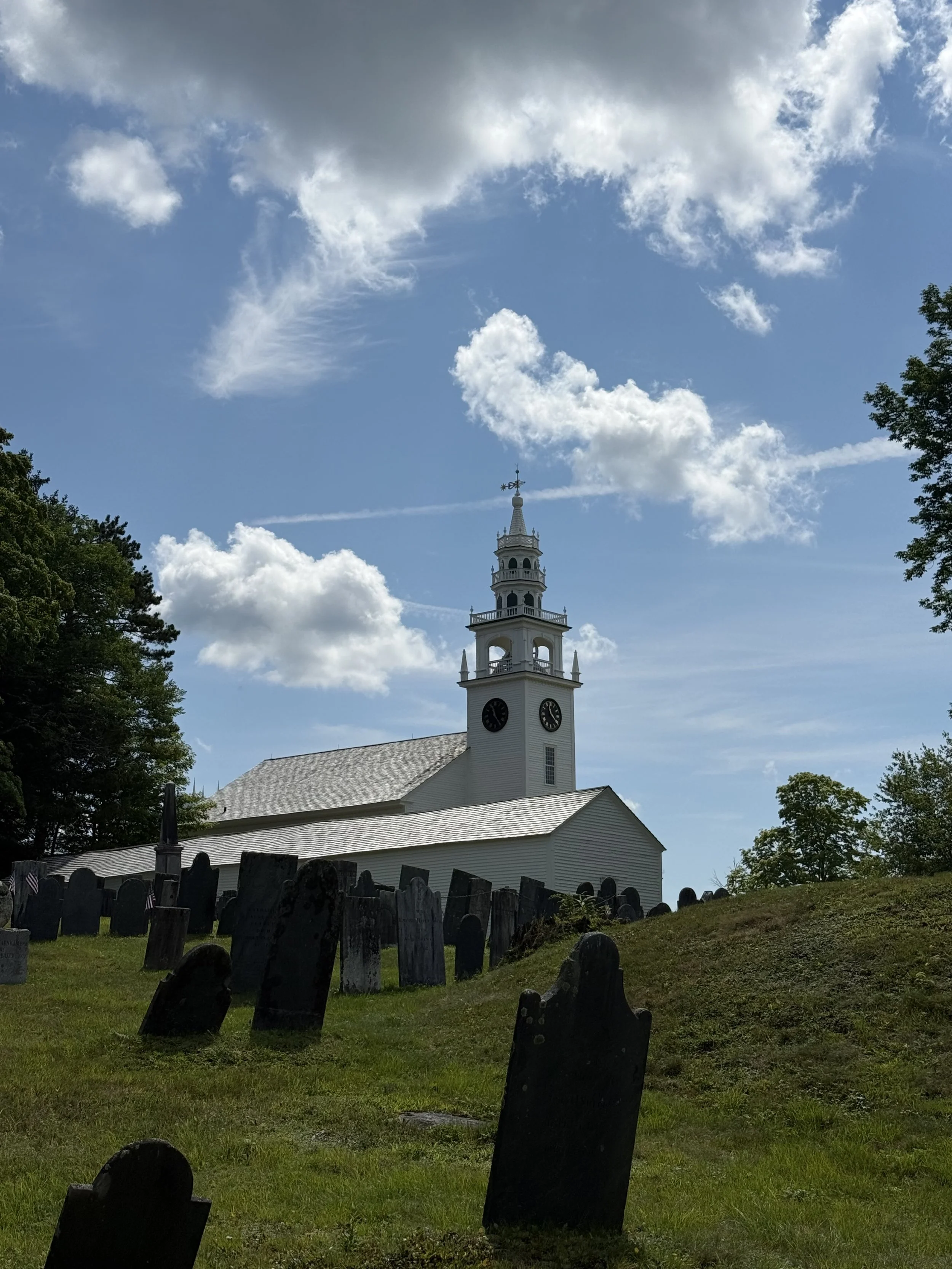
It was a bright August morning, and the minister looked forward to worship. It had been months since his congregation was able to worship together, but they were meeting outside this morning and he was looking forward to seeing familiar faces in person and not on his computer screen. They’d done their best to stay connected through the pandemic, but there’s nothing like being together, he said to himself.

He made his Sunday morning pilgrimage across the church grounds to ring the bell. Even the birds were singing songs of praise. His heart was full because his daughter had just given birth to his second grandchild the day before, a girl named after his grandmother. He wished his mother had hung on a little longer so she could have met the newest member of the family. Instead, he was meeting his siblings to spread her ashes in a few weeks. 

A ray of light shone through the branches as he rang the bell. It struck a large, intricate spiderweb beside the cemetery entrance. Glistening with dew, its extensive symmetry was impossible to ignore. Each strand connected to another, round and round, a comprehensive whole.

On his way back to the church he realized he’d already seen this morning’s sermon.

Serving the Plot

In writing classes, they’re quick to remind you that all things should serve the plot. Whether it’s a detail, conversation, or character, everything should point to the plot of the novel. It seems obvious, but writers often get distracted and wander off in directions that confuse or distract his or her readers. Great writers make sure all things serve the plot.

It’s advice that applies equally to our lives, but, like some writers, we forget and wander off in many directions. Plot-driven lives are clear, focused, and meaningful. Those living such a life say and do certain things that serve the plot, just as they refrain from conversations and actions that don’t.

Unfortunately, most of us either do not know the plot or get distracted. We end up living scattered lives and wander off distracted by what the crowd wants, our jobs require, or family expectations. Such a life is as confusing as it is frustrating.

Looking at all Jesus taught, he was determined to remind us of our life’s plot and offer examples of living plot-driven lives. Like dropping a centerboard helps a sailboat move forward, a plot-driven life heads in a specific direction. What we say and what we do serves the plot. 

I must confess I’ve not always known the plot. Even when I did, I wandered in different directions because of my distracted, scattered heart. Wanting to please others, wanting to make a name for myself and leave a legacy caused me to wander. While none of those motivations are bad, they’re all external and driven by a very needy ego. Until I stood back and asked what would serve God best, did I begin to understand the direction I was to take, the plot I wanted to serve. 

Questions: 

1.     Does your life have a clear plot or purpose?

2.     Does everything you do and say serve the plot?

3.     In what ways do you wander away, and what distracts you?