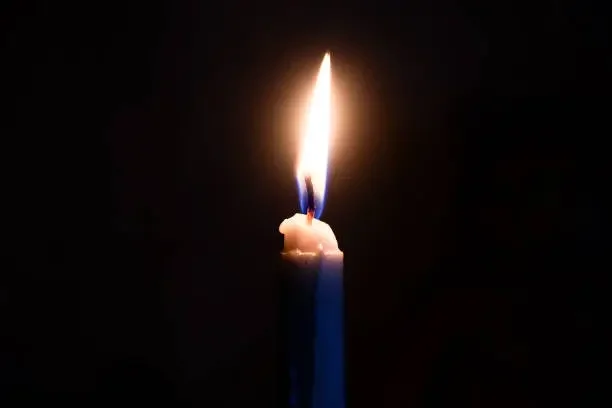
Advent 4: Candles in the dark

“The light shines in the darkness, and the darkness can never extinguish it.” JOHN 1:5

When I lit the candle, I became more aware of the dark. Despite the sermons I’ve heard this season, the meditations I’ve read, that single moment delivered the Advent message I most needed to hear.

As I write, it’s the shortest day of the year. There’s more darkness than light, but it also marks the moment when that all begins to change. Light begins its crawl back to its rightful prominence. It reminds me of what John wrote about darkness not being able to consumed the light. Although the short days feel like a flicker, the darkness only reminds me of light’s importance.

Last night I went and spoke at the local rehab center. Looking at the weary faces and glossy eyes, I was overwhelmed by the sadness before me. Darkness wears masks. As we sat together, laughs broke through, people smiled and nodded while we spoke of a not-too-distant hope. It was only a flicker, but when surrounded by the darkness it burned bright.

Watching the news these days is particularly difficult. Darkness seems to be everywhere I look and it’s shrouding the things I love about our country, and the friendships I treasure, most. The promise of “peace on earth and good will to all” sounds like a cruel joke when heard in concert with greed and disdain for others. Turning off the TV, my phone rings. My daughter wants to have me over for dinner and a movie. My starving soul is also offered a meal.

I can’t control the darkness no matter how hard I try. All I can do is light a candle. All I can do is change my focus. Maybe, just maybe, that will be enough.
Advent 3: For Behold . . .

For behold . . .


I was blessed to attend a small k-3 primary school called “Miss Mason’s School.” Located in an old mansion, our classrooms were the living room, den, and bedrooms. The place was magic not only because of the location, but the woman who founded the school. I’m sure she was a great educator, but what I remember most was her ability to tell a story.

At no time was that more apparent than on our third-grade ski trip up in Vermont. This annual rite of passage that took us away from our parents for a weekend was both exciting and frightening. To help us make it through without overwhelming homesickness, Miss Mason would sit with us in the dark and tell us a story as we tried to fall asleep. I do not remember any details of the stories, only the magical way they made me feel. Suddenly, the darkness was no longer frightening, and we were carried away to a place where dreams and life seemed to become one and the same. Our hearts calmed while our imaginations awakened.

In this season of Advent, I can’t help but wonder if that wasn’t how it felt for the shepherds as they sat in the darkness and longed to be home. An angel appeared in the dark, we’re told, bringing “good tidings of great joy for all people.” It must have sounded a lot like Miss Mason taking a deep breath and saying, “Once upon a time.” Their hearts must have calmed while their imaginations awakened as they heard the good news that spoke to the deepest longing within them : you do not need to be afraid . . . a great story is unfolding . . . it’s going to change you and the world forever.

Advent is many things, but chief among them is that it is a season to tell and hear stories. Maybe a grandparent tells of Christmases long ago, a parent describes when he or she was a child, or a child makes up a story about snowy wood in a forest just through a wardrobe.

In the end, however, all stories have a common source (at least the good ones do) and regardless of the details, they bring good tiding of great joy for all people: the darkness that surrounds us is nothing to fear, we were created by the greatest story-teller there is, and we’re invited to hear the “song of angels” once again and find our way into the great story as if for the first time.

It’s enough to get us to sit up, cross my legs, and listen up!


Advent II: Crowded Roads

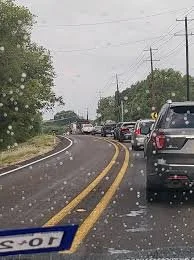
I grew up in Princeton, NJ, a wonderful pre-American Revolution town where the roads are tight and twisty. “They used to be horse and carriage tails,” my father explained. Picturesque and quaint, they’re now congested with unimaginable traffic. The roads were never meant for the cars and volume of today.

My memory of the Princeton roads came to me as I began this year’s Advent journey. As I head out on the spiritual roads of my soul, I can see that they, too, are congested and clogged. In this important season, my to-do list becomes overwhelmingly long and complicated. Like so many, I try to squeeze in every meaningful thing beside seasonal expectations and obligations only to experience no meaning and meet no expectation.

My soul was never meant for so much traffic. It’s easier to say simplify than to actually do less. Even though I know if I do less I will experience more, the temptation to keep filling remains too inviting. One of my favorite spiritual books has really wide margins, and I have always appreciated the “breathing room” the author gave us to write notes or sketch drawings as we consider the words she wrote. This is the season to widen our margins, to breathe more fully and more deliberately in the rooms of our souls.

I want to make time to sit with someone and really listen.

I want to wander outside and feel the cold air and see vistas that are only possible without the leaves.

I want to smell a real fire and let staring at the flames transport me to who knows where.

None of that’s possible when the pages are full and the list is endless. The problem is, spiritual subtraction takes work and always comes at a cost. Some things inevitably will be left undone. Hard choices will need to be made. Like cleaning out a closet or desk drawer, we often start strong then start giving way to keeping something we might want one day . . . but never do.

Advent is a time to stop sitting in traffic.

It’s a time to slow down, not speed up.

It’s a time to create space, not fill it. (Full glasses cannot receive anything new; no wonder the season can’t enter our hearts like it once did.)

The roads are congested; we’re suffocatingly busy.

In other words, there’s no room in the inn (or on the roads) . . . still.