Spring

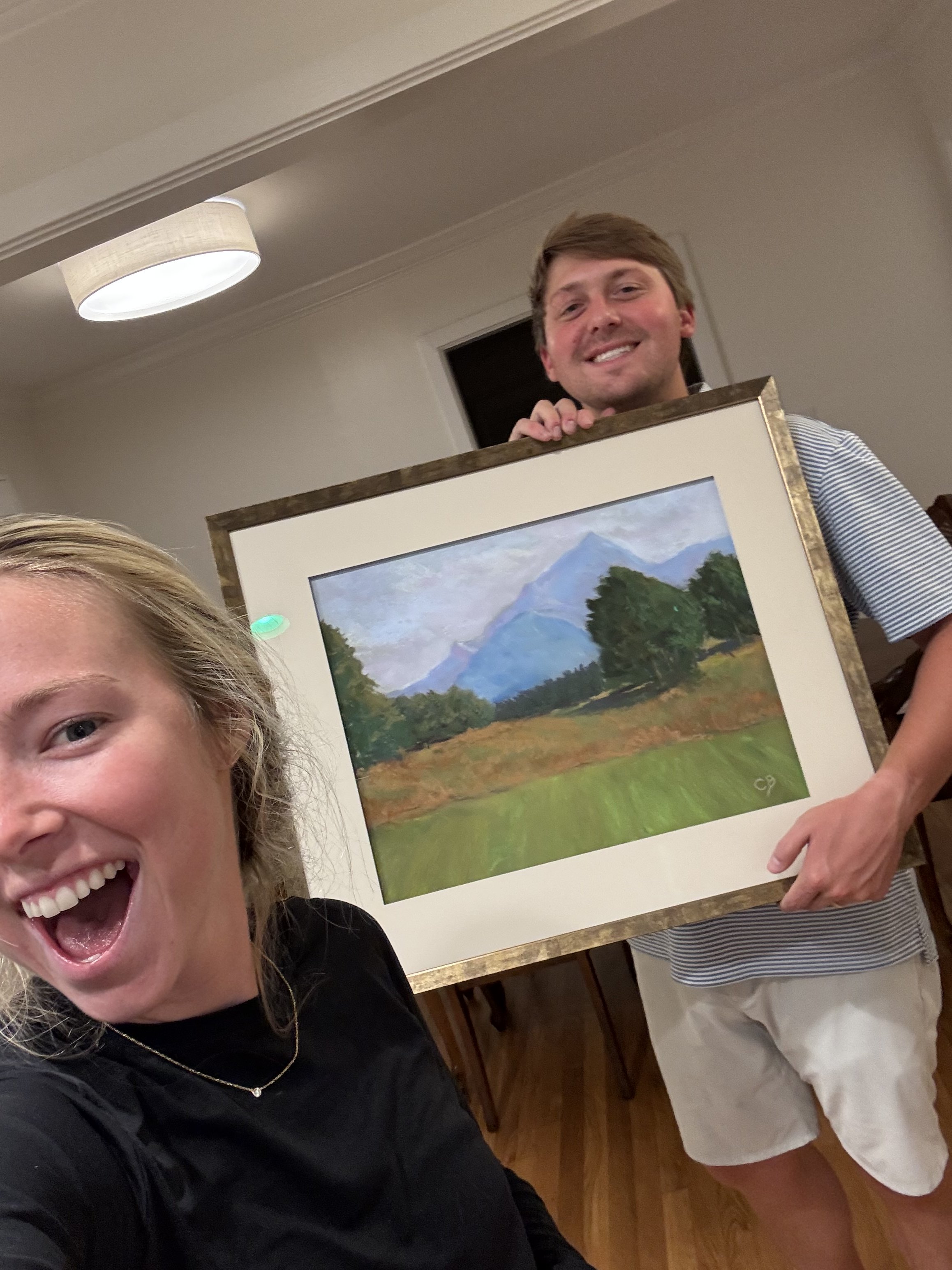
In the early morning light, the dogwoods in bloom outside my window look like trees covered in snow. In time, it will be clear what time of year it is, but, for now, I’m enjoying the twist of appearance. I don’t wish for it to be winter, by any means, but thinking this way reminds me how deceiving things can be in the wrong light. It reminds me how much I prefer spring to winter.

It’s not a great leap for me to see how often I look out and think it’s winter when, in fact, it’s spring, how often I mistake a blossom for a storm. I’m sure I’m not alone in this, but in dim light, or from a distance, looks can be deceiving, in faith as well as in life.

When I gave up drinking, I was certain I’d never be happy or have a good time again. I was wrong. I have found a new happiness.

When I left a job, I thought my usefulness was over. In that lighting, I couldn’t see that I would begin using my talents in different ways.

In a particularly dark time, I couldn’t see the light that was on its way. All I saw was winter. Then the blossoms arrived.

Faith is all about believing in spring. Winter comes to us all, but the good news is that winter is how seasons change. Spring would not be possible if leaves didn’t change color and fall to the ground, blossoms would not be possible without the water provided by winter’s storms. 

It doesn’t change the winter, or the storms, but it does give us an opportunity to trust God knows what he’s doing. As we approach Easter, this is important to keep in mind. As we head toward Jerusalem, there are dark clouds on the horizon. Tables will be turned, friends will run away, an arrest will be made, and death will happen. In the dim light of Holy Week, it’s sometimes confusing. We can think it’s winter, but there’s more to the story than all that. In fact, there’s a glorious spring ahead, on the other side of winter. 
Who is my neighbor

Who is my neighbor, I ask myself as I looked through my rolled-up window at the emaciated African-American woman standing at the traffic light. Her arms and legs were covered with marks, which I assume were the result of needles, and I was glad to be passing through this rough part of town. 

The next day, however, I sat in Sunday School looking at a painting of Jesus standing before the crowd after he was tortured and could only think about the woman on the street. Like her, Jesus’ arms and legs were covered with wounds. “Behold the man,” Pilate said, and I was filled with a profound sense of the world’s darkness and God’s grace colliding. Way back when and right this minute became entangled, and somehow I was being asked to make sense of it all.

I returned to my job on Monday morning where my class completed its poetry unit. I had my students read a wide range of poetry, from Mary Oliver to John Donne, and something told me, as if for the first time, that the key to my “one wild and precious life” was remembering that “no man (or woman) is an island.”

Life as it was intended to be, the kingdom of God as many call it, rests in our ability to see everyone, I mean everyone, as our neighbor.

The woman on the street and child in the seat beside me.

The people in Ukraine and the Russian solders being ordered to advance.

The people with bomb-ravaged homes and those whose homes have been ravaged by domestic abuse, addiction, and divorce.

The people out of work and those basking in significant success.

The man running through the neighborhood and the woman confined to a wheelchair.

The student with perfect SAT scores and the man who hasn’t recognized his wife in three years.

The crowd at the Greenpeace rally and those who stormed the capital.

No matter how hard we try to ignore it, no matter how quickly we roll up our windows, our neighbors are right in front of us. They may not look like us, behave like us, think, believe, or vote like us, but each is a beloved child of God. We may politely nod in the direction of such a truth on Sunday, maybe even give voice to it in prayer, but it’s back to business-as-usual on Monday. 

If God came and redeemed us, he came and redeem us all. I guess that’s why Christ looked so much like the woman on the street. In her scars, I need to see his scars. In her poverty, I need to see my abundance . . . and roll down the window.  Then, and only then, will the kingdom of God be at hand.

Friends

It’s early. Before I drive six hours to attend the funeral of a dear friend, I sit in our study and read my morning meditation book. Today’s is all about the importance of relationships. The author pointed out that never, when he was with someone on their deathbed, has he heard someone ask to see their diplomas, awards, or bank statements. What matters most are the people in our lives. It’s a powerful reminder as I prepare to honor my friend by driving so far, but there’s a conviction within the inspiration.

He and I met in college. He was a senior, I a freshman, and still he asked me to be his roommate on the choir tour. Our love for each other grew long past college, and he sang at my wedding reception. He was the kind of friend I loved to go on long drives with because we never stopped talking about things that mattered. He was the kind of friend who dropped everything when I needed a friend. He knew me better than I knew myself. He was one of the true gifts of my life. On my deathbed, he would be one of the people I would ask to see.

But, like far too many friendships, we did not stay in touch. We married, had children, and worked hard at our careers. We were in touch enough, as if there was some kind of minimum requirement, and I am happy to say we were starting to be in touch more often recently, but the fact is he was diagnosed with cancer in July and I didn’t know it, he got remarried last summer and I never heard. I am as torn by this distance between us as by his death.

I agree with this morning’s author that relationships are the most important thing in our lives – with God and others (The two are connected, as someone wise pointed out). I need to readjust my life to better reflect that. I certainly have enough time in the car to reflect on such a change, and I wanted to invite you to reflect on your relationships as well. Let’s not wait until our deathbeds.