Dark Churches

Unknown.jpeg

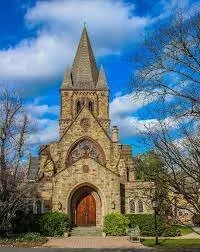
I grew up in a dark church. Although it instilled in me a life-long love of  sacred music and Gothic architecture, it’s theology was as pointed as the frames of the stained glass windows. It was a here/there church, where I was here and God was there, and life was a journey to reach God. Like a mountain, I was told to climb, and God would be waiting at the top. It was never said that way, but because there was clearly “a race set before me”, and because of my fallen nature I was “unworthy so much as to gather up the crumbs under the table,” my spiritual life became one of constant striving.

I’ve come to see what such a theological outlook has done to influence the rest of my life. I can see striving wherever I look – in every job and every relationship I’ve ever had. If I achieve this, people will admire my work. If I do this, he or she will like me. Even my life of recovery, which is supposed to be a life given, sometimes looks more like a duty assumed, another mountain to climb.

I write this in hopes that there are others out there who have grown up in similar churches, or have learned such an approach to life, and want to live life differently. I certainly do, but I have years of practice and will need to venture into this new approach one step at a time. 

God so loved the world, including me, that while we were still a complete mess God came and walked beside me. No longer am I here and God there, but we’re both here, side by side. As I list all the reasons why God should walk with someone more deserving, God turns and laughs. Nope, you can’t get rid of me that easy, God seems to say. You may want to use all your mistakes as a way to push me away, but it won’t work. I saw to it, once and for all.

Left without words, I feel God reach over and take my hand. I have no idea where we’re going, but it no longer really matters. I like where we are.

Pentecost 2021

images.png

“All of them were filled with the Holy Spirit and began to speak in other tongues as the Spirit enabled them. . . Some, however, made fun of them and said, ‘They have had too much wine.’” Acts 2: 4, 13

“It took me giving up drinking to live an intoxicated life.” Anonymous

When was the last time you led an intoxicated life? I know, that’s an unusual question coming from someone who gave up drinking years ago, but it comes from the story of Pentecost when the Holy Spirit descend upon the early Christians and cause them to behave in ways that led onlookers to wonder if they were drunk. God’s spirit can do that to a person.  

Unfortunately, people strive to live lives that are anything but intoxicated. We strive to live measured, calculated lives and weigh the pros and cons, evaluate the risks, before proceeding. Nowhere is that more evident than in our spiritual lives.  We love God, but don’t get carried away. Serve the poor, but don’t go too far. Give, but not so much that we have to change our way of life. Value our faith, but never speak about it.

There are wonderful exceptions, of course. The couple who makes a gift beyond anything they had before. The person who leaves her lucrative job to follow her life-long passion to help victims of domestic abuse. The minister who implements a progressive ministry despite his congregation’s conservative leanings. The teenager who invites a less-popular girl to her sleep over. The woman who forgives when all her friends encourages her to hate. The school that uses its endowment to cut tuition in half. And then there are the folks who, out of nowhere, take up painting, writing poetry, sign up for dancing lessons, or audition for a musical. Intoxicated souls, one and all, and wonderfully so.

On this Pentecost, I wonder if it isn’t time to let the Holy Spirit descend, to let the God’s fire burn more brightly. Others might look on and wonder what’s gotten into us, question the changes they see and hear, but that only means we’ve joined the disciples from long ago, and that’s something to be celebrated.

One Stream

williams-fork_orig-1024x680.jpg

In the mountains, there’s a stream that flows beside an old country church. Like the people in the pews, it usually stays within its banks. Just as it flows by the church, there’s a fork splitting the stream in two narrow branches before reuniting downstream. In the hot summer months, the large clear windows of the church are lifted, and the sound of the stream offers a descant to the congregation’s hymns. 

Tommy Ellis, a young boy who attends church with his grandmother each week, often stares out the window, particularly when the preacher gets carried away. One Sunday, the sermon was about the importance of forgiveness, and the preacher pointed out that there are two types of forgiveness - forgiveness of others and forgiveness of self. “Both are part of our one spiritual journey”, he said waving his index finger as if having found a hidden treasure. “We must forgive our brothers and sisters, but we must also forgive ourselves. The two might look separate, but they’re not, and some of us are good at one type of forgiveness, but not both.” Tommy didn’t understand what the preacher was saying, so he looked out the window at the stream. He watched as the stream divided and the water flowed until meeting again downstream.

On the ride home, his grandmother said how much she enjoyed the preacher’s sermon on forgiveness. “I never thought about there being two types of forgiveness,” she said, “forgiveness of others and forgiveness of self. I particularly liked the fact that the two are part of the same river.” It was then that Tommy realized he had heard the sermon, but he’d heard it by looking out the church window.