I bought the CD

            The clouds parted as if on cue. After morning torrential rains, we were able to leave our beach rental and head to a local outdoor brewery where there was also food and music. As someone who could only participate in two of the three, I sat eating my lunch waiting for the band to begin. There were only four musicians, but their talent was impressive and the music filled my soul. Feeling my enthusiasm from the stage, they played an Allman Brothers tune just for me! No wonder when it came time to leave, I left a tip and bought their CD. I wanted to be able to return to the perfect afternoon but, unfortunately, when I listened to it when I got home it was nothing like the music I’d heard.

            I was reminded of a story about a famous wine connoisseur who was asked to name the greatest bottle of wine he’d ever had. Given the fact that he’d tasted some of the finest, most expensive, wines on the planet, everyone was shocked when he said it was a very ordinary bottle of wine, the kind you can buy in a grocery store and open with a twist of your wrist. “It’s true,” he said to the bewildered crowd. “I was in a row boat with the woman who would eventually become my wife, he explained. “A misty rain was falling, and to this day I cannot recall a wine more spectacular. I’ve bought it many times since, but it has never been the same.”

            There’s something about a moment. No stereo can recreate it, no amount of money can reproduce it. Despite lifting a cell phone throughout a concert, the footage is never the same as seeing the show live. Despite the fact that all the same people are gathered around the table as before, the evening lacks the spark from the last time you were together. (And don’t even get me started on movie sequels, or remade song!)

The problem is, moments are like sand in our hand. No matter how hard we try, the grains will slip through our fingers, leaving only memories of the sand’s softness and warmth. Moments are given, then they’re gone. Trying to hold on to a moment, or recreate it, never works and sometimes it’s lost through the very act of trying to hold onto it. 

            Summers are often filled with wonderful moments. Perhaps this summer we can open our clenched fists and enjoy the moments as they happen. It may mean taking less photographs, buying less CD’s. But it also may mean that by letting go we receive more than we’ve ever had before.

The Gospel According to Billy Buckner

Unknown.jpeg

It was divinely ironic that on the morning of Billy Buckner’s death the topic at my morning meeting was forgiveness. I remember sitting on the couch in my house in New Hampshire in 1986 believing that the Red Sox would soon break the curse and win their first World Series in ages. With victory all but certain, a Mets player hit a nothing ball along the first base line for what would be an easy out, except it went through Buckner’s legs leading not only to the loss of that game but the series itself. I knew at that moment the error would be the only thing most people would ever remember when thinking about Billy Buckner. Regardless of all the great things he did as an athlete, and the kindness he showed as a person, he would always be known for that one mistake. 

He’s not unique, of course. There are many known not for the good they did but the wrong, and we take a certain amount of comfort by casting such people aside, putting them in a box reserved for such people. It helps keep us from this messy thing called life. It makes life appear tidy, with the good people over here and the bad over there. Richard Rohr warns us against such dualistic thinking, the kind where a person, place, belief, political view, or event is either good or bad, black or white, right or wrong. Such thinking is easy. It eliminates the need to face the messiness of life. (No wonder so many are flocking to churches and political pockets that speak in such ways.)

The spiritual life, however, calls us to more difficult thinking. It draws us into the messiness of life, not away from it. It demands we see beyond our divisions so we can discover what we have in common as imperfect children of God. It’s hard, though, which is why we so often don’t want to do it. It’s easier to point a finger than hug. It’s easier to put people, places, and events in tidy mental boxes at either end of an issue than to wrestle with the messiness found in-between. 

“Everyone’s got their shit,” was the slogan of a community I once knew, but only two people wanted the tee shirt, my mother and me. Can you imagine what our houses, churches, schools, and political parties would look and sound like if we lived by such an irreverent slogan? We just might talk about Billy Buckner and the many others who’ve let balls slip through their legs differently. By forgiving what they did wrong, we might be able to see what they did right. Who knows, we might even look at the person in the mirror in a new way!


The Bridge (or A Letter to my Therapist)

images.jpeg

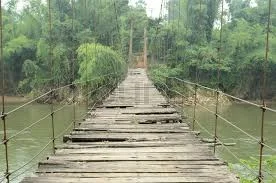
There once was a village tucked away in the mountainous region of Nepal. On three sides of the village were mountains protecting the village, and on the fourth a broad fast-flowing river across which there was a bridge. It was the only way in and out of the village and the villagers relied on the bridge. It had been built years ago by their ancestors who had long since died, but the current villagers did all they could to maintain it. When a plank would get loose, they would re-attach it. When the paint began to peal, they would add a new coat. It was as if the bridge was a part of the village, which only made it more unsettling when they learned it needed to be replaced.

“The bridge has served us well,” one person said. “But the time has come to replace it with a new bridge.”

“Can’t we just keep repairing it like we have,” someone asked. “It’s all we’ve ever known. It served our ancestors well. Can’t we keep maintaining it?”

“No,” came the adamant response. “The bridge’s foundation is rotted, and even our well-intentioned maintenance is only slightly effective.”

So the villagers agreed to tear down the bridge and replace it, but as the work began many had second thoughts. When the bridge was half-way taken apart, they approached the village leader again.

 “Why’d we decide to do this anyway?” asked one person.

“Maybe we should stop and put it back the way it was,” said another. “At least we could walk across it then.” 

“The problem is you are only seeing the bridge that is being taken apart,” shared the wise leader. “You need to look and see the bridge that’s coming.”

“But how can we see that?” someone asked. “It doesn’t exist.”

“But it does!” replied the leader. “We just haven’t built it yet.”