Reading Circles

Just thinking about it causes me to sweat and squirm in my seat. Once a week, in Mrs. Dennison’s third grade class, we were called up in groups of seven for Reading Circle. While others worked independently, those of us who were summoned approached, with book in hand, to read aloud. Mrs. Dennison always went first, then we took turns, starting on her left, reading a paragraph at a time. I always sat far enough from her so I could count the paragraphs and begin practicing mine in advance. I never listened to the others, and only wanted to make it through the paragraph assigned to me. I, then, quickly counted paragraphs to begin preparing again. 

No matter how hard I tried, I always messed up. Sometimes it was only a slight stumble, but other times it was big enough to cause the others in the circle to roll their eyes, snicker, or even laugh. Their laughter only made things worse, and, like a rolling snowball, mistake one led to number seventeen. One time, Mrs. Dennison just gave my paragraph to the person next to me, hoping I might recover before we went around again.

I try hard not to think about Mrs. Dennison’s reading circle, but I couldn’t help it, recently. I was gathered with a group of recovering alcoholics and addicts, taking turns reading from what is called “The Big Book.” Like the circles long ago, we went around the room, and even though I’m almost sixty, I still found myself counting paragraphs, so I could prepare.

Some of the readers were new to the circle, others were well-versed in such meetings. Some read with ease, others struggled. What stood out, however, was no one laughed when a reader struggled. I guess we all knew it was more important that a person feel comfortable, than that he or she read well. Getting and staying sober is hard enough. We don’t need to add to it with rolled eyes, snickers, or all-out laughter. 

I don’t remember anything we read, but left the circle with a lesson I wished I had learned long ago.
Leave the Dents

fullsizeoutput_122b.jpeg

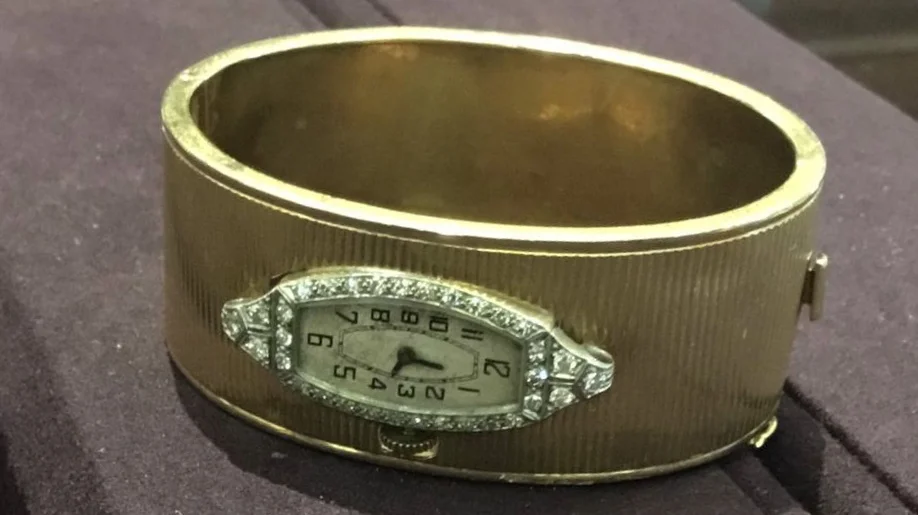
One of the pieces of my mother’s jewelry given to me after her death was a gold bracelet with a watch embedded in it. I picked it because I remember her wearing it, and it “looks like her.” When I hold it, it feels like she’s just stepped out of the room and will be right back. I wish that were true.

I took it to the local jeweler to get an estimate for getting the watch to work again, and, when I heard back, they said it needed only a minor fix, but added “we won’t be able to remove the dents." “The dents?” I replied, surprised. “Oh, please leave the dents!”

The dents remind me of the woman to which it once belonged. I can picture the creation of each dent. One, I’ll bet, came when she got up suddenly from the dining room table when I told her I’d somehow smashed the car against the wall in front of our house. Another might have come when she hit her wrist against the bleachers, cheering for my brother at a football game or wrestling match. I’m sure one came from pounding the kitchen table, as she demanded my sister eat three mouthfuls (a family rule) of liver, and another when nervously sitting on an airplane, desperate to get home to her other daughter after she was in a terrible car accident. The dents, however they were made, are what make the bracelet Mom's. Without them, it would just be another piece of jewelry.

Unfortunately, our world has an aversion to dents. Both in the things we own, and the lives we live, we seem determined to remove (or hide) the dents, when, in fact, it’s the dents that tell the stories of our lives. It’s the dents that make our things, and ourselves, real.

I can’t wait until I get the bracelet back and let my wife wear it. No doubt, she will add dents of her own. 

The Gospel of Dale's Yacht Basin

TLaA1zjsRECxOtvu3BZnug.jpg

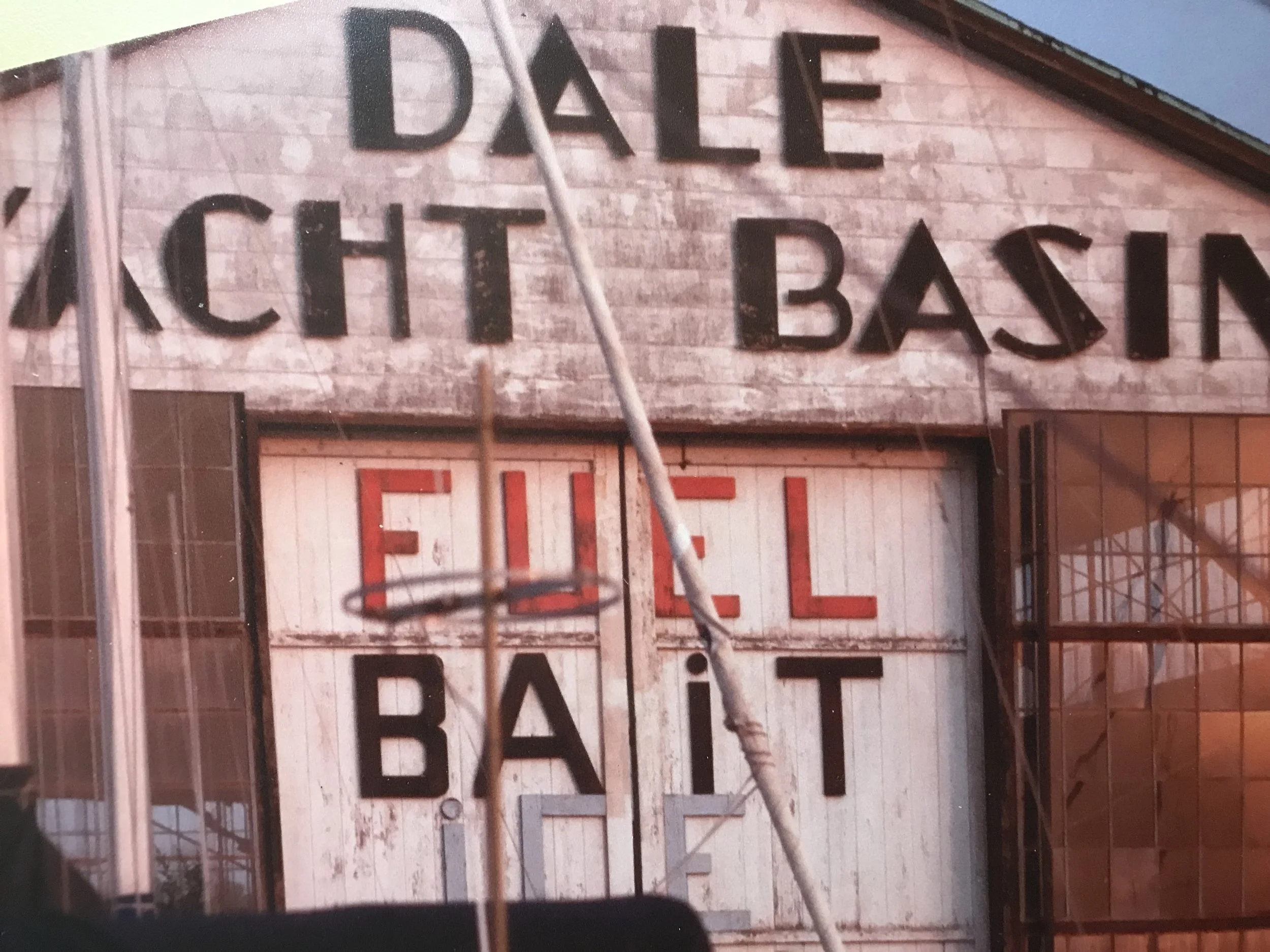
Little did I know growing up, that everything I needed for a meaningful life was right before my eyes. It wasn’t written on the wall. It was written on a huge boat warehouse. There, as plain as the waves splashing against my boat, were the words, “Fuel, Bait, and Ice.” All I needed to do was apply them to my life, and I would have a real shot at a happy voyage.

Fuel

To live fully, we must have fuel. Of course, we need fuel to sustain our bodies and, like the fuel we put in our cars, there is good fuel and mediocre. I am no expert on nutrition (clearly), but I am convinced the quality of the fuel we use plays a bigger role in our well-being than we imagine.

What I also know is we need spiritual fuel as well. Too often we operate on automatic pilot and forget we need to put something into our tank if we have a chance of moving forward. Whether sitting quietly, reading something meaningful/inspirational, or walking, it is essential we fill up our tanks before we venture out on the seas beyond the harbors.

Bait

“Well,” said the wise old fisherman, “They’re not just going to jump in the boat. You need bait, boy! What the hell are they teaching in schools these days?”

He was right, the fish were not going to jump into the boat, nor would the opportunities of my life. I needed to put bait on the hook. I needed to make the effort to call the potential contact; I needed to follow my instincts, even if I wasn’t sure where they would lead. The world eagerly awaits our participation, but we need to show up, or as the fisherman would say, bait the hook.

Ice

In my childhood home, I didn’t need a clock to tell me when it was 5:00. The sound of ice entering a glass was as predictable as the tides. Still, the memory of the sound reminds me of the gift of sitting with those we love and talking about our days. We were not brought into this world just to work. There must be time to put our work aside (and cell phones, computers, and televisions), grab the ice, and just be present.

Ice can also reduce swelling when we injure ourselves. Like a five o’clock talk, ice can help us heal. So, whether in a glass, or applied to a wound, ice reminds us to slow down, otherwise we are sure to burn out.

****

It’s never too late to read the words that were before me as a child, or to recall lessons taught, or advice given at the dining room table. This Lent, I think I’ll pull my boat up to the dock, refuel, get some bait, and also some ice.