Ashes

“Why are you here,” asked the minister, as she began her Ash Wednesday homily. “Is it for the ashes?”

It was one of those set-up questions where she was going to challenge conventional thinking. Of course we came for the ashes. Having ashes placed on our foreheads, with the words “Thou art dust, and to dust thou shalt return,” is the way we inaugurate Lent, the season when we reflect and realign our lives. Some, also give up chocolate.

As expected, she went on to point out that God really doesn’t care about such practices. Outward and visible signs get old for God. God’s more concerned with what's going on inside. In fact, in certain denominations, the scripture assigned to the Ash Wednesday service is all about not making a show of your religion. Even as a child, I was confused by the mixed messages.

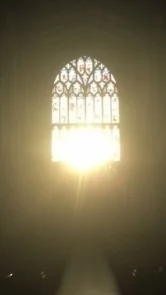
Sitting there last night, though, I still knew the answer was “yes.” I did come for the ashes, but not the ones administered on my forehead. I came because of the ashes I’ve created. Whether through the fires of unkind thoughts or comments, self-centered behavior, or an overwhelming need to feel good-enough, I've left piles of ashes all over the place. We all have.

Lent is a time to admit what we have done or left undone, to look anew at the ways we have not lived the lives God hoped we might, and then turn our sight toward the end of the season where grace abounds. But last night, it was all about the ashes. They’re why I came.
Connecting the Dots

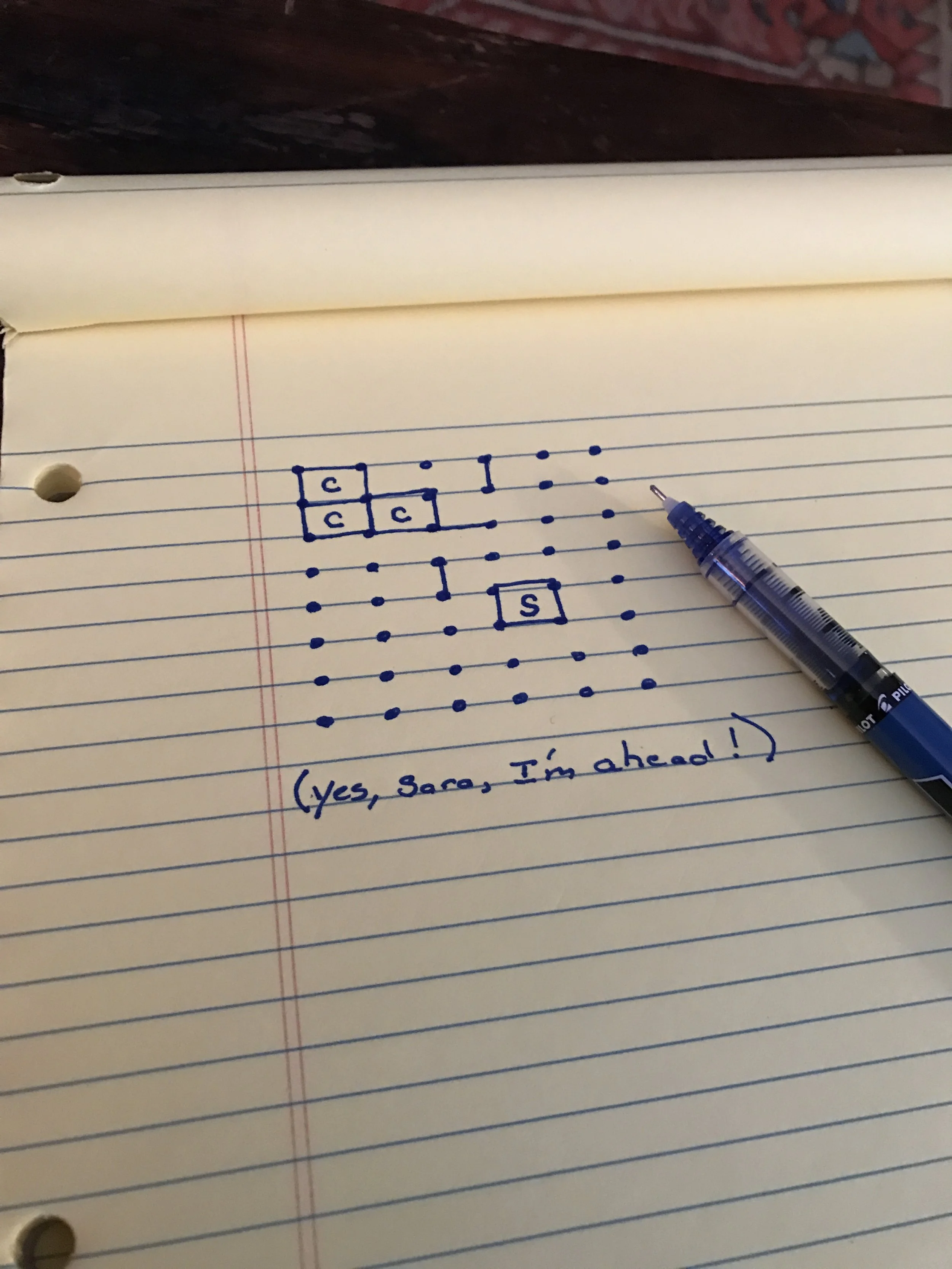
My sister and I used to play Connect-the-Dots, a game where you draw lines between dots arranged in a grid, the winner being the one who completes the most squares. A step above the numbered dots on a restaurant’s children’s menu where, if you follow the order, it creates an image of a spaceship or dinosaur. At fifty-seven, I thought such games were a thing of the past, but recently I realized how often I still connect the dots. We all do, and maybe it’s time to stop.

·      Your boss asks to meet later in the afternoon, which causes you to imagine what he or she wants to talk about. Maybe you’ve done something wrong, or someone has complained. Walking away from the conversation, where you were praised for something you did well, you can only shake our head in disbelief about where you let your mind go. Dots are endless.

·      Seeing a couple engaged in a heated conversation at a nearby table, you think their marriage is in trouble, that one of them has done something unforgivable, that this is the beginning of the end, only to find they’re discussing the recent election. Dots are misleading.

·      Hearing someone has lost his or her job, you wonder what they did wrong and imagine scenarios - ranging from insubordination to embezzlement, alcoholism to harassment - which could justify the firing, only to learn the company was bought by another and the staffing changes were due to redundancies. Dots are a waste of time.

·      You awaken with a piercing headache and wonder all morning if there’s something significant wrong. Working through a long list of illnesses which could cause such pain, you eventually remember drinking little or no water the day before and realize you’re dehydrated. Dots are distracting.

·      Your spouse is uncharacteristically silent in the morning, or a friend looks at you funny or not at all, and you spend the rest of the day wondering what you’ve done wrong, only to find that they slept poorly or were distracted by something having nothing to do with us. Dots lead us astray.

Connecting the dots can explain or make sense of a world that’s often bewildering. Connecting the dots can help explain the confusing behavior of others. In our desperation for sense and understanding, however, we connect dots that have no business being connected. Perhaps we need to let the dots stand on their own and trust the world doesn’t need our help drawing lines. 

Buildings

At the end of the year, I received a calendar from my alma mater. Flipping the pages, I strolled the campus I love, but noticed something by the time I got to May: there were no people in the pictures! While it was wonderful to see familiar buildings, the college, like many colleges and institutions, forgot about the people. They missed the point. They focused on the wrong things.

I’m afraid my college is not unique, and the lesson from the calendar is one for us all. As individuals, families, and groups, we often make the same mistake. We think our family is a name, our worth is a sum, and our identity an occupation. Like the calendar, we miss the point by focusing on the wrong things.

Phillips Chapel, Canterbury School

Phillips Chapel, Canterbury School

I’ve been blessed to build three chapels in my life, one a traditional chapel with walls, roof and windows, the other two outside. In each, there was a hunger beneath our efforts. Like cathedrals of old, we strove to say something others would understand just from entering the space, and I feel confident in each case we succeeded, but, I must confess, we also missed the point at times. Our excitement and enthusiasm caused us to focus on the building more than it’s purpose, its form over its function, its donors more than the stained glass windows they gave.

I remember taking a wise old priest over to look at the chapel, and after looking around in awe, he said something I’ve never forgotten: “My prayer for this place is that it wears out and does not rust.” He understood the desire to build something special and then treat it like a museum. He understood the seduction of architecture and the risk of focusing on the wrong thing.

Groton Chapel

God so love the world, he sent not a committee, the humorous saying goes, but it could be adapted to say, God so loved the world, he sent not a building.

As we begin another year of life, it is my hope and prayer we will look beyond the buildings of our lives and refocus on what matters, the people and purposes we’ve been given.