Buildings

At the end of the year, I received a calendar from my alma mater. Flipping the pages, I strolled the campus I love, but noticed something by the time I got to May: there were no people in the pictures! While it was wonderful to see familiar buildings, the college, like many colleges and institutions, forgot about the people. They missed the point. They focused on the wrong things.

I’m afraid my college is not unique, and the lesson from the calendar is one for us all. As individuals, families, and groups, we often make the same mistake. We think our family is a name, our worth is a sum, and our identity an occupation. Like the calendar, we miss the point by focusing on the wrong things.

Phillips Chapel, Canterbury School

Phillips Chapel, Canterbury School

I’ve been blessed to build three chapels in my life, one a traditional chapel with walls, roof and windows, the other two outside. In each, there was a hunger beneath our efforts. Like cathedrals of old, we strove to say something others would understand just from entering the space, and I feel confident in each case we succeeded, but, I must confess, we also missed the point at times. Our excitement and enthusiasm caused us to focus on the building more than it’s purpose, its form over its function, its donors more than the stained glass windows they gave.

I remember taking a wise old priest over to look at the chapel, and after looking around in awe, he said something I’ve never forgotten: “My prayer for this place is that it wears out and does not rust.” He understood the desire to build something special and then treat it like a museum. He understood the seduction of architecture and the risk of focusing on the wrong thing.
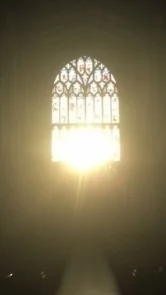
Groton Chapel

God so love the world, he sent not a committee, the humorous saying goes, but it could be adapted to say, God so loved the world, he sent not a building.

As we begin another year of life, it is my hope and prayer we will look beyond the buildings of our lives and refocus on what matters, the people and purposes we’ve been given.

Sacred Spaces

IMG_2281.jpg

It’s a sacred space. No, it’s no Mount Rushmore, National Cathedral, or 911 Memorial, but, for me, it’s just as meaningful and inspirational. Adjacent to our local Cultural Art Center, the stool sits waiting for the next customer. 12 years ago, I sat there, waiting as my son auditioned next door. I remember having a glass of red wine, probably two, but I can’t recall what kind. All I know is it was the last time I had a drink.

I’m embarrassed to have such an ordinary sacred space. As one with a flare for the dramatic, a bar stool is far from mesmerizing. Perhaps a spotlight or brass plaque could be installed, but it’s not sacred to anyone but me. People pass by it every day, take a seat, talk about their days with others sitting beside them, never knowing what a special place it is. To them, it is not special, but, to me, it’s the most sacred space I know.

I write about it not to draw attention to my sacred space, but yours. We all have them, but too often we're too busy to give them much thought, let alone return to them. Perhaps it’s where you met your spouse, a child was born, or a momentous decision was made. It could be where someone you love is buried, where an accident occurred, or you received news that altered the direction of your soul. Important moments come wrapped in a variety of paper, just as sacredness calls us to remove our shoes in the most unlikely places.

Today is as good a day as any to stop and think about the sacred spaces in your life. Recall the spaces you hold sacred. (Go ahead, make a list of 10.) Go back, if only in your heart and mind, to the spaces, to the moments that shaped your life. Who was there? What happened? Such reflections can not only increase our awareness of what has been, but may awaken us to the sacred of life surrounding us still.

Magnifying Life

Sometimes to comprehend the magnitude of life a person needs a magnifying glass. The more I read about spiritual practices and the art of writing, the more I’m pointed toward the specific. The purpose is not to reduce life to the simplistic, but to see in life's simplicity its enormous complexity.

With a magnifying glass, you can see all of creation reflected in a drop of dew resting on a blade of grass. With a magnifying glass, a car ride conversation can become a eucharistic feast, a handwritten note, a sermon, a vote, a courageous statement of faith. With a magnifying glass, a baby’s fingernail can reveal a parent’s true legacy.

No wonder Thoreau went into the woods, where he could confront life not on a distant horizon but in a corner of a cabin in the woods. No wonder Melville went looking for a whale, Williams a red wheelbarrow, the Beatles a day in the life.

Seeing life through a magnifying glass is nothing new. It’s why monks make bread, composers write melodies, poets compose poems, and artists cover canvasses. Whether with words or actions, in our jobs, faith, or relationships, all of life begs us to consider the lilies of the field, not because the rest of life is insignificant, but because it is more significant than we can comprehend.